Body Shape Guide
Hourglass Body Shape
The hourglass body shape — also called an hourglass figure — generally describes balanced bust and hip proportions with a clearly smaller, defined waist. This guide explains common hourglass proportions, top vs bottom hourglass variations, outfit ideas, dresses, jeans, and styling tips. Body-shape definitions and measurement thresholds can vary between systems.
Hourglass Body Shape
Bust and hips are relatively balanced, with a clearly smaller waist.
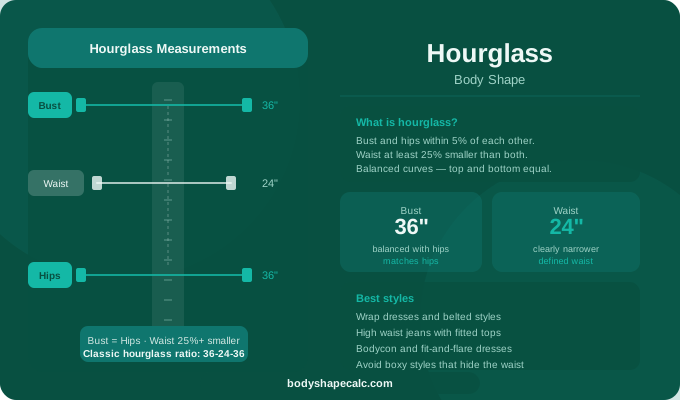
Definition
What Is an Hourglass Body Shape?
An hourglass body shape is a proportion pattern where the bust and hips are similar in measurement and the waist is significantly smaller. This creates a balanced upper and lower body with visible waist definition — resembling the shape of an hourglass or figure 8.
Bust
The bust measurement is generally close to the hip measurement. This relatively balanced upper and lower body is a common characteristic used to describe an hourglass shape.
Waist
The waist is clearly smaller than both the bust and hips. This visible waist definition is a key characteristic used to describe an hourglass shape.
Hips
The hips are balanced with the bust, creating even upper and lower proportions. Neither the top nor the bottom dominates the silhouette.
Measurements
Hourglass Body Shape Measurements
Hourglass figure measurements are about proportions, not a specific size or weight. People of all heights, weights, and sizes can have hourglass proportions.
Common Hourglass Proportions
You may have hourglass-like proportions if:
Bust and hips are relatively similar in measurement
Waist is noticeably smaller than both bust and hips
Waist-to-hip ratio is relatively low compared with the bust and hip measurements
Example: Bust 36", Waist 27", Hips 37" shows the type of balanced proportions commonly associated with an hourglass shape.
How to Measure for Hourglass Shape
Use a soft tape measure and take three key measurements:
Bust — around the fullest part of your chest
Waist — around the narrowest point, about 1 inch above belly button
Hips — around the fullest part of your hips and seat
Use the body shape calculator below to get an instant result from your measurements.
Top vs Bottom Hourglass
Top Hourglass vs Bottom Hourglass Body Shape
The hourglass body shape has two common variations — top hourglass and bottom hourglass — depending on whether the bust or hips are slightly more dominant.
Top Hourglass Body Shape
A top hourglass body shape is where the bust is slightly larger than the hips — but both are still close in proportion with a clearly defined waist. The upper body appears slightly more dominant. Common style approach: balance with wider-leg bottoms or A-line skirts to even out proportions. V-necks and scoop necks can draw the eye downward.
Bottom Hourglass Body Shape
A bottom hourglass body shape is where the hips are slightly larger than the bust — but both are still close in proportion with a defined waist. The lower body appears slightly more dominant. Common style approach: add visual volume to the upper body with structured tops, boat necks, and puff sleeves to balance out the proportions.
Quick Check
Check Your Hourglass Body Shape Proportions
Enter your bust, waist, and hip measurements to see whether your proportions match an hourglass body shape.
Style Tips
How to Dress an Hourglass Body Shape
The main styling goal for an hourglass body shape is to maintain the natural balance between bust and hips while highlighting the defined waist. Here are the most effective style tips.
Define the waist
Wrap tops, belted dresses, fitted jackets, and waist seams all highlight natural waist definition. A belt at the natural waist is one of the simplest and most effective styling tools for hourglass shapes.
Follow your body line
Clothing that follows the body's natural curves keeps hourglass proportions balanced. Body-skimming fabrics like jersey, ponte, and stretchy denim work particularly well.
Keep top and bottom balanced
Since bust and hips are already balanced, keep volume even on both sides. If you wear a voluminous top, balance with fitted bottoms — and vice versa.
Try wrap styles
Wrap dresses and wrap tops are among the most flattering styles for hourglass shapes because they naturally cinch at the waist and follow the body's curves.
Use soft or medium structure
Structured pieces like blazers and tailored jackets look polished when they fit the waist without adding excess bulk. Avoid very stiff fabrics that hide the waist definition.
Avoid hiding the waist
Very boxy, shapeless, or oversized pieces can hide hourglass proportions. If you want to show your shape, choose pieces with some waist definition — even subtle tucks or seams help.
Best Outfits
Best Clothes for Hourglass Body Shape
These clothing styles tend to work well for hourglass body shapes because they highlight the waist and maintain balanced proportions.
Best Tops for Hourglass Body Shape
Wrap tops, fitted tops, V-necks, scoop necks, peplum tops, off-shoulder tops, and tops with ruching at the waist. Avoid very boxy tops that hide waist definition entirely.
Best Jeans for Hourglass Body Shape
High-waist jeans, bootcut jeans, straight-leg jeans, and wide-leg jeans with a defined waistband all suit hourglass shapes well. Look for jeans with stretch fabric to accommodate the waist-to-hip difference. Avoid very low-rise jeans that sit below the natural waist.
Best Dresses for Hourglass Body Shape
Wrap dresses, fit-and-flare dresses, body-con dresses, belted dresses, sheath dresses, and midi dresses with a defined waist. These styles naturally follow or highlight the waist. A-line dresses with a fitted top section also work well.
Best Pants and Bottoms
High-waist trousers, pencil skirts, A-line skirts, fitted midi skirts, and bootcut or wide-leg pants. High-waist styles sit at the natural waist and maintain the hourglass silhouette. Avoid very stiff, flat-front trousers that don't accommodate curves.
Hourglass Variations
Types of Hourglass Body Shape
The hourglass category includes several variations based on overall body composition and proportion intensity.
Soft Hourglass Body Shape
A soft hourglass has the same balanced bust-to-hip proportions and defined waist, but with softer, rounder curves and a less angular silhouette. The waist definition is present but more subtle. Common in women with higher body fat percentage distributed evenly.
Athletic Hourglass Body Shape
An athletic hourglass has balanced proportions and a defined waist with more muscular definition. The shoulders may be slightly broader and the waist definition more pronounced due to lower body fat. Common in women who train regularly, particularly strength training.
Slim / Neat Hourglass Body Shape
A slim or neat hourglass has the same proportional ratios as a standard hourglass but at a smaller overall scale. All measurements are smaller but maintain the balanced bust-to-hip ratio and defined waist. Often described as petite hourglass.
Comparisons
Hourglass Body Shape vs Other Body Shapes
Understanding how hourglass compares to similar body shapes helps you identify your shape more accurately.
Hourglass vs Pear
Both have wider hips than waist. The difference: hourglass has balanced bust and hips. Pear shape has hips clearly wider than bust — the upper body is narrower. A common mix-up because both have defined waists.
Hourglass vs Rectangle
Rectangle also has bust and hips close in measurement — but the waist is less defined. If your bust, waist, and hips are all similar, it is more likely rectangle than hourglass.
Hourglass vs Inverted Triangle
Inverted triangle has broader shoulders or bust than hips. Hourglass has balanced bust and hips. If your bust is significantly wider than your hips, it is likely inverted triangle rather than hourglass.
Hourglass vs Apple
Apple shape carries more weight around the waist and midsection. Hourglass has a clearly smaller waist. If your waist is close to or larger than your bust and hips, it is apple rather than hourglass.
Hourglass vs Spoon
Spoon shape is similar to pear but with a more pronounced hip shelf. Hourglass has more even bust-to-hip balance. If you have a visible high hip curve with narrower bust, spoon is more likely.
Hourglass vs Triangle
Triangle shape has hips significantly wider than bust — more extreme than pear. Hourglass maintains bust-to-hip balance. If hips are more than 10–15% wider than bust, it is triangle not hourglass.
How Common Is It?
How Rare Is the Hourglass Body Shape?
The hourglass body shape is widely used in fashion and body-shape discussions, but how common it is depends on the population studied and the measurement rules used to define it. Different classification systems can produce different results.
Why Classification Varies
The hourglass category uses a combination of relatively balanced bust and hip proportions with noticeable waist definition. Because body-shape systems use different definitions and thresholds, the number of people classified as hourglass can vary between studies and calculators.
Body shape can change
Body proportions can shift with age, weight changes, pregnancy, and exercise. Some women develop more hourglass proportions over time, while others may move away from hourglass proportions. Body shape is not fixed — it describes your current measurements, not a permanent category.
Related Tools & Guides
More Hourglass Body Shape Resources
Hourglass Body Shape Outfits
Complete outfit ideas and style inspiration for hourglass shapes — wrap dresses, fitted tops, high-waist jeans, and more.
How to Dress for Your Body Type
General style tips for all body shapes including practical outfit advice for every proportion and size.
How to Find Your Body Shape
Step by step guide to finding your body shape from measurements.
Body Shape Calculator
Use the free calculator to confirm your body shape from bust, waist, high hip, hip, and optional shoulder measurements.
Waist to Hip Ratio Calculator
Calculate your waist-to-hip ratio and compare your measurements with general body-proportion references.
Body Measurement Calculator
Full body measurement tool including BMI, WHR, body fat estimate, and body shape from all measurements.
Dress Size Calculator
Estimate your US, UK, and EU dress size from your measurements.
FAQ
Hourglass Body Shape – Frequently Asked Questions
What is an hourglass figure?
An hourglass figure is a body-shape category generally described by relatively balanced bust and hip proportions with a clearly smaller waist. The terms "hourglass figure" and "hourglass body shape" are commonly used to describe the same general proportion pattern.
What are hourglass figure measurements?
Hourglass figure measurements: bust and hips within 5–12% of each other, and waist at least 25% smaller than both. Example: Bust 36", Waist 27", Hips 37" — a classic hourglass figure. The waist-to-hip ratio for an hourglass figure is typically between 0.65 and 0.75. The exact size does not matter — hourglass is about the ratio between measurements, not the numbers themselves.
What are the measurements for an hourglass body shape?
Hourglass body shape measurements are based on proportions rather than a specific clothing size or weight. The bust and hips are generally close in measurement, while the waist is noticeably smaller than both. Because different classification systems use different definitions, there is no universal set of measurements that applies to everyone.
What is an hourglass body shape?
An hourglass body shape is a proportion pattern where the bust and hips are relatively similar and the waist is clearly smaller. It describes the relationship between these measurements rather than a person's height, weight, or clothing size.
How do I know if I have an hourglass figure?
Measure your bust, waist, and hips and compare the proportions. If your bust and hips are relatively similar while your waist is noticeably smaller, your proportions may fit the hourglass category. You can also use the body shape calculator on this site for a measurement-based estimate.
What is the difference between top hourglass and bottom hourglass?
A top hourglass body shape has the bust slightly larger than the hips, while still maintaining a defined waist. A bottom hourglass body shape has the hips slightly larger than the bust, while still maintaining a defined waist. Both are variations of the hourglass shape — the difference is which end is slightly more dominant.
What should an hourglass body shape wear?
Common styling choices for hourglass proportions include wrap dresses, fitted or waist-defined tops, high-waist jeans, pencil skirts, fit-and-flare dresses, and belted styles. Clothing preferences are personal, so these are general style suggestions rather than rules.
What is the difference between hourglass and pear body shape?
Both hourglass and pear body shapes can have a defined waist. An hourglass shape generally has relatively balanced bust and hip measurements, while a pear shape is generally described as having hips that are wider than the bust. Body-shape definitions can vary between classification systems.
How rare is the hourglass body shape?
There is no single reliable percentage for how common the hourglass body shape is because studies and calculators can use different populations and measurement definitions. How common the category appears to be therefore depends on the classification method used.
Can you get an hourglass body shape through exercise?
Exercise can change muscle development and body composition, which may affect overall proportions. However, it cannot change the underlying structure of your bones. Exercise should therefore not be viewed as a guaranteed way to create a particular body-shape category.
What is a soft hourglass body shape?
A soft hourglass body shape generally describes relatively balanced bust and hip proportions with a smaller waist and softer, rounder curves. The term is used informally in some body-shape and styling discussions rather than as a standardized measurement category.
Can hourglass body shape be any size?
Yes. Hourglass body shape is about proportions, not clothing size, weight, or height. A petite woman, a plus-size woman, and a tall woman can all have hourglass proportions if their bust and hips are balanced and their waist is clearly smaller. Size does not determine body shape — proportions do.
What is the hourglass body shape waist-to-hip ratio?
Waist-to-hip ratio (WHR) can be used as one way to describe body proportions, but there is no single WHR value that universally defines an hourglass body shape. A lower WHR generally indicates a larger difference between the waist and hips. Use the waist-to-hip ratio calculator to calculate your WHR from your measurements.