Hourglass Variation Guide
Soft Hourglass Body Shape
A soft hourglass is a gentler version of the classic hourglass shape — your bust and hips are still balanced, but your waist is only slightly smaller rather than dramatically defined. It's one of the most common hourglass variations, and one of the most misunderstood. This guide explains exactly what makes a soft hourglass, how it's measured, and how to dress for it.
Check Your Exact Shape
Enter your measurements to find out if you're a soft hourglass, classic hourglass, or another shape entirely.
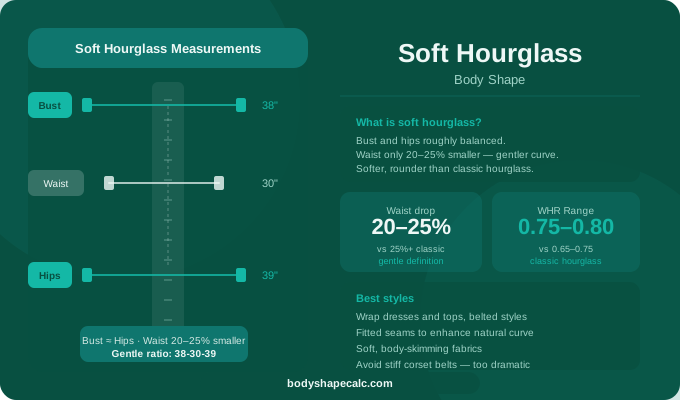
Definition
What Is a Soft Hourglass Body Shape?
A soft hourglass is a body shape where your bust and hips are roughly balanced and your waist is somewhat smaller, but not dramatically so. It has the basic hourglass structure — no single area dominates — without the sharp waist contrast people usually picture when they hear "hourglass."
The core idea
Soft hourglass sits on a spectrum. On one end is the classic hourglass with a sharply cinched waist. On the other end is rectangle, where the waist barely differs from the bust and hips at all. Soft hourglass falls in between — closer to hourglass than rectangle, but gentler than the textbook version.
Why it's so common
Many women assume they're "not really hourglass" because they don't have a dramatic waist, when in fact a soft hourglass is itself a legitimate, common classification. It's often misclassified as rectangle simply because the waist difference isn't extreme.
Not the same as petite
Soft hourglass describes proportion, not size or height. It can occur at any height, weight, or frame size — what matters is the relationship between bust, waist, and hip measurements, not the actual numbers themselves.
The Numbers
Soft Hourglass Measurements
Soft hourglass is defined by the same three measurements used for every body shape — bust, waist, and hips — but with a specific, narrower waist contrast than a classic hourglass.
Bust and hips
Bust and hip measurements are within about 1–5% of each other — close enough to be considered "balanced," just like a classic hourglass. Neither the top half nor bottom half visually dominates.
Waist contrast
Your waist is roughly 20–25% smaller than your bust and hips. This is the key range that separates soft hourglass from classic hourglass (25%+ smaller) and from rectangle (under 20% smaller).
Waist-to-hip ratio
Soft hourglass typically falls around a WHR of 0.75–0.80. A classic hourglass usually sits lower, around 0.65–0.75. The slightly higher ratio reflects the gentler waist definition.
Real Examples
Example Soft Hourglass Measurements
Here are a few sample measurement sets that fall into the soft hourglass range, to give you a concrete sense of the ratios involved.
32–25.5–33
Bust and hips within 3% of each other. Waist about 20–23% smaller than bust and hips — right at the soft hourglass threshold.
36–29–37
Bust and hips closely balanced. Waist roughly 21–24% smaller — a typical soft hourglass ratio.
38–31–39
Balanced bust and hips with a waist about 18–21% smaller — borderline between soft hourglass and rectangle, depending on the exact numbers.
Comparison
Soft Hourglass vs Classic Hourglass
Both shapes share the same balanced bust-to-hip foundation. The difference comes down entirely to how dramatic the waist contrast is.
Classic hourglass
Waist is at least 25% smaller than both bust and hips. The waist looks sharply defined even in unstructured clothing. WHR typically 0.65–0.75. This is the shape most people picture when they hear "hourglass figure."
Soft hourglass
Waist is about 20–25% smaller than bust and hips. The waist is noticeable but gentle — it often needs a belt, wrap style, or fitted seam to really show. WHR typically 0.75–0.80. Still hourglass, just a quieter version of it.
Common Confusion
Soft Hourglass vs Rectangle — How to Tell the Difference
This is the comparison people get wrong most often, since both shapes have a fairly subtle waist.
Soft hourglass
Waist is still measurably smaller — about 20% or more compared to bust and hips. There is a real, if gentle, curve at the waist when you look closely or feel for it.
Rectangle
Waist is less than about 20% smaller than bust and hips — sometimes nearly the same width. The body reads as a fairly straight line from shoulder to hip, with minimal waist curve.
Styling Guide
How to Dress a Soft Hourglass Shape
The goal for a soft hourglass is to gently enhance the waist definition you already have, rather than trying to create a dramatic hourglass that isn't there.
Wrap and belted styles
Wrap dresses and tops, or belted styles, add just enough definition at the waist to bring out your natural shape without looking forced. This is the single most effective styling trick for soft hourglass.
Fitted, not boxy
Semi-fitted cuts that follow your body's line work better than fully structured tailoring (too sharp for the softness of your shape) or boxy oversized fits (which hide the waist curve you do have).
High-waisted bottoms
High-waisted jeans, trousers, and skirts sit right at your natural waistline, which reinforces the waist-to-hip relationship even when the contrast itself is subtle.
Soft, flowing fabrics
Fabrics with a bit of drape — jersey, soft knits, lightweight wovens — skim the body and follow your natural curve, rather than stiff fabrics that can flatten or hide it.
Avoid extreme cinching
Very tight corset belts or extremely structured waist-cinching pieces can look disproportionate on a soft hourglass, since they create a contrast more dramatic than your natural shape supports.
Bodycon, sparingly
Bodycon styles work, but choose ones with some stretch and a slight A-line flare rather than a perfectly straight cut, which suits a sharper hourglass better than a soft one.
Dresses
Best Dresses for Soft Hourglass
Wrap dresses
The adjustable tie lets you control exactly how much waist definition to create — ideal for a shape where the natural contrast is gentle.
Fit-and-flare
A fitted bodice through the waist with a softly flared skirt highlights the curve you have without exaggerating it.
Belted shirt dresses
A relaxed shirt dress cinched with a slim belt at the natural waist adds shape to an otherwise straight silhouette.
Related Guides
More Hourglass and Body Shape Resources
Hourglass Body Shape Guide
The full hourglass classification, measurements, and variations including top, bottom, and soft hourglass.
Hourglass Body Shape Outfits
Complete outfit ideas for hourglass shapes — wrap dresses, high-waist jeans, fitted tops, and more.
All Body Shapes for Women
A complete overview of every female body shape, including how soft hourglass fits among the others.
FAQ
Soft Hourglass — Frequently Asked Questions
What exactly is a soft hourglass body shape?
A soft hourglass is a body shape with balanced bust and hip measurements (within about 1–5% of each other) and a waist that is roughly 20–25% smaller than both — a gentler waist contrast than a classic hourglass, which requires 25% or more.
Is soft hourglass the same as rectangle?
No. Rectangle has a waist that is less than about 20% smaller than the bust and hips, with very little visible waist curve. Soft hourglass has a real, if gentle, waist curve in the 20–25% range. The two shapes can look similar in loose clothing but respond differently to fitted styles.
How do I know if I'm a soft hourglass or classic hourglass?
Calculate the percentage difference between your waist and your bust and hips. If your waist is 25% or more smaller, you're a classic hourglass. If it's roughly 20–25% smaller, you're a soft hourglass. Below 20%, you're closer to rectangle.
What is the best waist-to-hip ratio for soft hourglass?
Soft hourglass typically falls around a waist-to-hip ratio of 0.75–0.80. A classic hourglass usually has a lower ratio, around 0.65–0.75, reflecting its more dramatic waist contrast.
What should a soft hourglass avoid wearing?
Very stiff, boxy, or fully structured pieces tend to hide the gentle waist curve a soft hourglass has. Extremely tight corset-style cinching can also look disproportionate, since it creates more contrast than the shape naturally supports. Semi-fitted, flowing pieces generally work better.