Women's Body Shape Guide
Body Shapes for Women
Body shape classification systems commonly describe proportions using categories such as hourglass, pear, apple, rectangle, inverted triangle, spoon, and triangle. These categories are based on relationships between body measurements rather than overall body size. This guide explains the commonly used categories, how they are described, and links to detailed guides for each shape.
Find Your Body Shape
Use the free body shape calculator to estimate your body-shape category from bust, waist, high hip, and hip measurements.
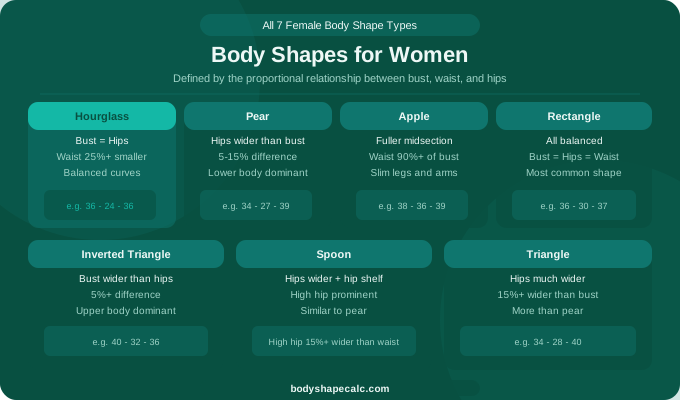
Overview
How Many Body Shapes Are There for Women?
Different body-shape classification systems use different numbers of categories. This guide covers seven commonly used categories: hourglass, pear, apple, rectangle, inverted triangle, spoon, and triangle. The categories describe proportion patterns rather than fixed or universal body types.
What determines body shape?
Body shape describes the proportions between measurements such as the bust, waist, high hip, and hips. It is not determined by overall body size, weight, or height alone. People with different measurements can have similar proportions and therefore fall into the same broad body-shape category.
How to identify your body shape
Measure your bust, waist, high hip, and hips with a soft tape measure. You can compare the proportions yourself or enter the measurements into the body shape calculator for an estimated body-shape category.
Can body shape change?
Yes. Body shape can change with age, weight fluctuation, pregnancy, and exercise. Body shape describes your current proportions — it is not a fixed or permanent category. Recalculate whenever your measurements change significantly.
All Body Shape Types
The 7 Different Body Shapes for Women
Here is a complete overview of every female body shape type — with measurements, characteristics, and style tips.
1. Hourglass Body Shape
Common proportions: Bust and hips are relatively similar in measurement, while the waist appears noticeably smaller. Different classification systems use different measurement guidelines.
What it looks like: Balanced upper and lower body with a clearly defined, smaller waist. The classic curved silhouette. Neither top nor bottom dominates.
Best outfits: Wrap dresses, fitted tops, high-waist jeans, belted styles, V-necks. Any style that maintains the waist definition.
Variations: Top hourglass (bust slightly larger), bottom hourglass (hips slightly larger), soft hourglass, athletic hourglass.
2. Pear Body Shape
Common proportions: Hips are relatively wider than the bust or upper body, often with some waist definition. Measurement guidelines vary between classification systems.
What it looks like: Narrower upper body with wider hips and thighs. Weight carried in the lower body. A commonly used body-shape category.
Best outfits: Bright or structured tops, A-line skirts, bootcut jeans, wrap dresses, boat neck styles. Add upper-body interest.
Variations: Soft pear, athletic pear, petite pear. Also called triangle body shape.
3. Apple Body Shape
Common proportions: The midsection is relatively fuller, with less waist contrast compared with the bust and hips. Exact measurement patterns vary between classification systems.
What it looks like: Fuller midsection with less waist definition. Often slim legs and arms. Weight carried mainly around the middle. Also called oval or round body shape.
Best outfits: V-neck tops, empire waist dresses, A-line dresses, open cardigans, high-rise straight-leg jeans. Skim the midsection and highlight legs and neckline.
Variations: Slim apple, plus size apple, apple with slim legs.
4. Rectangle Body Shape
Common proportions: Bust, waist, and hips are relatively close in measurement, creating a straighter silhouette with less waist contrast.
What it looks like: Even proportions throughout. Less defined waist. Straight body line. Also called straight, banana, or ruler body shape. A commonly used body-shape category.
Best outfits: Wrap tops, peplum tops, belted dresses, high-waist jeans, structured blazers. Create waist definition.
Variations: Soft rectangle, athletic rectangle, rectangle with tummy.
5. Inverted Triangle Body Shape
Common proportions: The shoulders, bust, or upper body are relatively wider than the hips, creating a broader upper-body silhouette.
What it looks like: Broader shoulders or bust with narrower hips. Common in athletic women and women with a larger bust relative to narrow hips. Upper body is dominant.
Best outfits: V-neck tops, A-line skirts, wide-leg pants, flared jeans, fit-and-flare dresses. Add lower-body volume and streamline the upper body.
Variations: Soft inverted triangle, athletic inverted triangle.
6. Spoon Body Shape
Common proportions: The hips are relatively wider than the bust, and the high-hip area may create a more noticeable curve or shelf. The exact proportions vary between classification systems.
What it looks like: Similar to pear but with a more dramatic high hip curve or shelf. The hip shelf is the most distinctive feature — a visible ledge above the fullest hip point.
Best outfits: Boat neck tops, A-line skirts, bootcut jeans, wrap dresses, smooth-fabric bottoms. Add upper-body width, define waist, skim hip shelf.
Variations: Petite spoon, plus size spoon.
7. Triangle Body Shape
Common proportions: The hips are noticeably wider than the bust or upper body, creating a lower-body-dominant silhouette. The distinction between triangle and pear varies between classification systems.
What it looks like: Clearly wider lower body with a noticeably narrower upper body. The body widens from top to bottom. Triangle and pear are sometimes treated as separate categories, while some style guides use the terms interchangeably.
Best outfits: Structured tops, puff sleeves, boat necks, A-line dresses, bootcut or wide-leg jeans. Strong upper-body balance needed.
Variations: Triangle pear (moderate), strong triangle (very pronounced). Also called pear in many style guides.
Quick Reference Chart
Body Shapes for Women — Chart
Use this quick reference chart to compare the main characteristics of each body-shape category.
Hourglass
Upper and lower body are relatively balanced | Waist noticeably defined | Curved silhouette
Pear
Hips relatively wider than upper body | Waist may be defined | Lower-body emphasis
Apple
Relatively fuller midsection | Less waist contrast | Upper and lower proportions vary
Rectangle
Bust, waist, and hips relatively close | Less waist contrast | Straighter silhouette
Inverted Triangle
Upper body relatively wider than hips | Broader shoulder or bust area | V-shaped silhouette
Spoon
Hips relatively wider than bust | High-hip curve may be noticeable | Lower-body emphasis
Triangle
Hips noticeably wider than upper body | Lower-body dominant proportions | Narrower upper body
Plus Size
Body Shapes for Plus Size Women
All 7 body shape categories apply to plus size women. Body shape is about proportions — the ratio between measurements — not total size or weight. A plus size woman can have any body shape.
How to identify plus size body shape
The same measurement method applies for plus size women — measure bust, waist, high hip, and hips, then compare the ratios. The body shape calculator works for all sizes. The proportions determine the shape, not the numbers themselves.
Body Shape Categories at Different Sizes
Body shape categories can occur at any clothing size. The same proportion-based descriptions can be used for plus size women, although individual measurements and silhouettes vary from person to person.
Best Jeans by Shape
Best Jeans Cuts for Each Female Body Shape
Jeans fit differently on different body shapes. Here is a quick guide to the best jeans cuts for each female body shape.
Hourglass
High-waist straight-leg, bootcut, and wide-leg jeans can work well. Stretch fabric can help accommodate differences between the waist and hips.
Pear
Bootcut, wide-leg, flared, and high-waist jeans can work well. Bootcut and wide-leg cuts add visual width toward the hem.
Apple
High-rise straight-leg, bootcut, and wide-leg jeans with a comfortable waistband can work well. Choose the rise and fit according to your comfort and preferred silhouette.
Rectangle
High-waist, wide-leg, flared, and boyfriend jeans can add visual dimension. Choose details and rises according to your preferred silhouette.
Inverted Triangle
Wide-leg, bootcut, flared, and lighter-wash jeans can add visual volume toward the lower body and create a more balanced silhouette.
Spoon / Triangle
Bootcut, wide-leg, and high-waist straight-leg jeans are common styling options. Simpler hip details can create a streamlined look.
How Common?
Most Common Body Shapes for Women
The frequency of different body-shape categories depends on the population studied, the measurement method, and the classification system used. Popular style categories should not be treated as universal prevalence rankings.
Why Prevalence Is Difficult to Compare
Studies and style guides may use different measurements and different definitions for categories such as rectangle, pear, and hourglass. As a result, the reported frequency of a body shape can vary depending on the method used.
Body Shape Varies Between Individuals
Body proportions exist on a spectrum, and some people may fit more than one description depending on the classification system. A person's category can also change when their measurements change.
Related Guides
Body Shape Style Guides for Women
Hourglass Body Shape Outfits
Complete outfit ideas for hourglass shapes — wrap dresses, high-waist jeans, fitted tops, and more.
Pear Body Shape Outfits
Outfit ideas for pear shapes — A-line skirts, bootcut jeans, structured tops, and balance strategies.
Kibbe Body Type Test
Find your Kibbe body type free — all 13 types explained.
Body Shape Outfits — All Shapes
Complete outfit guide for every body shape.
Perfect Body Measurements for Women
Average body measurements, common proportions, and the 36-24-36 reference explained.
Apple Body Shape Outfits
Outfit ideas for apple shapes — empire dresses, V-neck tops, wide-leg trousers, and more.
Rectangle Body Shape Outfits
Outfit ideas for rectangle shapes — peplum tops, belted dresses, wrap styles, and curve-creating looks.
Inverted Triangle Outfits
Outfit ideas for inverted triangle shapes — A-line skirts, wide-leg pants, V-necks, and lower-body balance.
How to Dress for Your Body Type
Complete style guide for all body shapes — practical outfit advice for every proportion and size.
FAQ
Body Shapes for Women — Frequently Asked Questions
What are the different body shapes for women?
There are 7 main female body shape types: hourglass (balanced bust and hips, defined waist), pear (hips wider than bust), apple (fuller midsection), rectangle (balanced bust, waist, and hips), inverted triangle (shoulders or bust wider than hips), spoon (pronounced hip shelf), and triangle (hips significantly wider than bust).
How many body shapes are there for women?
Different body-shape classification systems recognize different numbers of categories. This guide uses seven: hourglass, pear, apple, rectangle, inverted triangle, spoon, and triangle. Some systems combine categories such as pear and triangle or do not treat spoon as a separate category.
What is the most common body shape for women?
The frequency of body-shape categories can vary depending on the population studied, the measurement method, and the classification system used. Because definitions differ, there is no single universal ranking of how common each body shape is.
Are some body shapes more common than others?
The reported frequency of body shapes varies depending on the population, measurements, and classification system used. Because definitions differ, there is no single universal ranking of how common each body shape is.
What are the body shape types for plus size women?
All 7 body shape types apply to plus size women — hourglass, pear, apple, rectangle, inverted triangle, spoon, and triangle. Body shape is determined by proportions between measurements, not by total size. A plus size woman can have any body shape depending on how her measurements relate to each other.
What are the fruit body shapes for women?
The fruit body shape names are a popular informal classification system: apple (fuller midsection), pear (wider hips), hourglass (balanced and curved), banana or ruler (straight/rectangle), and sometimes avocado or lemon for variations. This guide uses the standard measurement-based names — apple, pear, hourglass, rectangle — rather than informal fruit names.
How do I find out what body shape I am?
Measure your bust, waist, high hip, and hips using a soft tape measure. Enter these measurements into the body shape calculator on this site for an estimated body-shape category. Alternatively, compare your measurements manually: if hips are wider than bust, you are likely pear or triangle. If bust and hips are balanced with a clearly smaller waist, you are likely hourglass. If all measurements are similar, you are likely rectangle.
What are curvy body shapes for women?
Curvy body shapes typically refer to shapes with visible curves — most commonly hourglass, pear, spoon, and sometimes apple. Curvy generally means a more pronounced difference between waist and hips. The hourglass is the most classically "curvy" shape because it has balanced curves top and bottom. Pear and spoon are also considered curvy because of prominent hip curves.