Body Measurements Guide
Perfect Body Measurements for Women
What are the perfect body measurements for women? There is no single measurement that defines an ideal body. This guide explains average body measurements, common body-shape proportions, the well-known 36-24-36 reference, and what your measurements can tell you about body shape and clothing size.
Check Your Measurements
Enter your measurements to find your body shape and see how your proportions compare.
The Truth
There Is No Single Perfect Body Measurement
Before diving into numbers, it is important to understand what body measurements actually mean and what they do not mean.
Measurements describe proportions
Body measurements — bust, waist, and hips — describe the proportional relationship between different parts of your body. These proportions determine your body shape category. They do not determine your attractiveness, health, worth, or beauty. Any set of proportions can be styled, celebrated, and dressed well.
Perfect is subjective and cultural
What is considered the ideal body measurement has changed dramatically across history and cultures. The hourglass ideal of the 1950s gave way to the slender ideal of the 1990s and the curvy ideal of today. No measurement is universally or permanently perfect — ideals change, bodies do not need to.
Proportions matter more than numbers
Body-shape categories generally describe relationships between measurements rather than one required set of numbers. Two people can have different measurements and still have similar body-shape proportions. The exact way those proportions are classified varies between body-shape systems.
Average Measurements
Average Body Measurements for Women
Published average body measurements vary by country, dataset, measurement year, age group, and population. The figures below are reference values rather than targets, and they should not be treated as a definition of a normal or ideal body.
Average measurements — United States
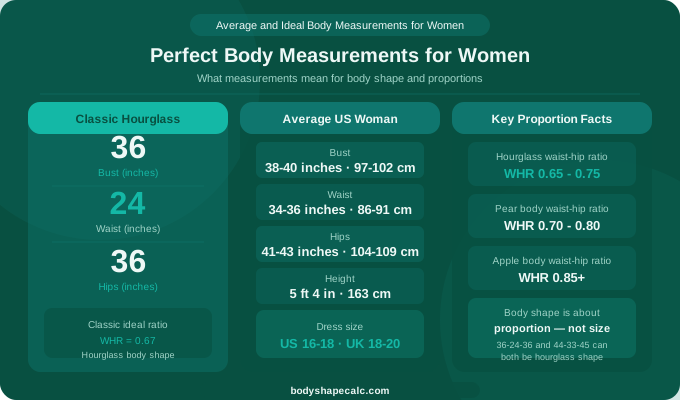
Bust: approximately 38–40 inches
Waist: approximately 34–36 inches
Hips: approximately 41–43 inches
Height: approximately 5 feet 4 inches
Dress size: approximately US size 16–18
Reference figures can vary by source, dataset, measurement year, and sizing system. Treat these numbers as general reference values rather than fixed standards.
Average measurements — United Kingdom
Bust: approximately 38 inches
Waist: approximately 34 inches
Hips: approximately 40 inches
Height: approximately 5 feet 4 inches
Dress size: approximately UK size 16
UK averages and clothing-size references can vary by dataset, measurement year, and sizing system.
Common Proportions
Common Body Proportions by Body Shape
Body-shape systems describe common proportion patterns rather than universal measurement rules. The examples below are illustrative, and definitions can vary between classification systems.
Hourglass proportions
Hourglass proportions generally describe a relatively balanced bust and hip measurement with a noticeably smaller waist. The amount of waist definition can vary between people and classification systems.
Illustrative example: 34-26-35. This is an example of balanced bust and hip proportions with a more defined waist, not a required measurement standard.
Pear proportions
Pear proportions generally describe hips that are wider than the bust or upper body, often with some waist definition. The amount of difference between the upper and lower body can vary between people and classification systems.
Illustrative example: 34-27-39. The hips are noticeably wider than the bust, creating a lower-body-dominant proportion.
Apple proportions
Apple proportions generally describe a fuller midsection with less waist contrast. The waist may be relatively close in measurement to the bust and hips, although individual proportions vary considerably.
Illustrative example: 38-36-39. The waist is relatively close to the bust and hip measurements.
Rectangle proportions
Rectangle proportions generally describe bust, waist, and hip measurements that are relatively close, creating a straighter silhouette with less waist contrast. Different classification systems may use different thresholds.
Illustrative example: 36-30-37. The bust and hips are relatively close, with less waist contrast than a classic hourglass description.
Inverted triangle proportions
Inverted triangle proportions generally describe an upper body that is wider than the hips. The shoulders, bust, or chest may appear broader relative to the lower body, creating a V-shaped or upper-body-dominant silhouette.
Illustrative example: 40-32-36. The bust is wider than the hips, creating an upper-body-dominant proportion.
Spoon proportions
Spoon proportions are generally described as a lower-body-dominant silhouette with hips wider than the bust and a more noticeable curve around the high-hip area. The prominence of this curve can vary between people and classification systems.
Illustrative example: 34-27-35-39, using bust-waist-high-hip-hip measurements. The high hip is noticeably fuller than the waist.
The Classic Ideal
The 36-24-36 Measurement — What Does It Mean?
The 36-24-36 measurement is a well-known cultural reference for an hourglass-like proportion. It is one specific measurement example, not a universal body standard.
What 36-24-36 represents
36-24-36 means a bust of 36 inches, waist of 24 inches, and hips of 36 inches. The bust and hips are equal, while the waist is substantially smaller. This is one commonly cited example of an hourglass-like proportion, not a required measurement for that body-shape category.
The waist-to-hip ratio is 24/36, or approximately 0.67. A ratio can describe one aspect of body proportions, but body-shape classification can use different measurements and methods.
Why the number is not the point
Different measurement sets can also show a similar pattern of balanced bust and hips with a smaller waist. The 36-24-36 reference became culturally prominent, but it should not be treated as a required or universal measurement standard.
Your measurements do not need to match a particular number. Body-shape categories describe proportion patterns, and classification methods can vary between systems.
Height and Measurements
How Height Affects Body Measurements
Height can affect the overall scale of body measurements and the way clothing fits. Body-shape descriptions, however, focus on proportions rather than using height alone to assign a category.
Petite women (under 5'4")
Petite sizing generally refers to garment proportions designed for shorter heights rather than a specific body shape. A person at a shorter height can have any body-shape proportion, just as a taller person can.
Average height women (5'4"–5'7")
Standard clothing ranges often use a reference height when developing size charts, but sizing conventions vary between brands. Height alone does not determine body shape, and clothing fit can depend on proportions as well as overall height.
Tall women (5'8" and above)
Taller people may have different torso and limb proportions, which can affect clothing fit and where measurements are taken. A taller person can have any body-shape proportion; height itself does not determine whether someone is hourglass, pear, apple, rectangle, or another category.
What It All Means
What Your Body Measurements Actually Tell You
Your body measurements are useful data points — here is what you can learn from them.
Body shape identification
The relationship between bust, waist, hip, and, in some systems, shoulder or high-hip measurements can be used to estimate a body-shape category such as hourglass, pear, apple, rectangle, inverted triangle, spoon, or triangle. Enter your measurements into the free body shape calculator at bodyshapecalc.com to get an estimated result. Body-shape categories are descriptive and can vary between classification systems.
Clothing size
Your measurements can help you compare clothing sizes across brands and countries, but size labels are not standardized. A measurement set that corresponds to one size in one brand may correspond to a different size elsewhere. Always compare your measurements with the specific brand's size chart rather than relying on the label alone.
Waist-to-hip ratio
Dividing your waist measurement by your hip measurement gives your waist-to-hip ratio (WHR), a measure of body proportions. Reference ranges can vary by guideline, population, age, and context, so a WHR should not be treated as a universal definition of body shape or health. The WHR calculator at bodyshapecalc.com/tools/waist-to-hip-ratio-calculator/ calculates your ratio and provides general reference information.
Style guidance
Your body-shape category can provide one way to explore clothing styles that may complement your proportions. You can use it as a styling reference when comparing jeans cuts, dress silhouettes, necklines, and swimwear, while personal preference, comfort, and garment fit remain important.
Related Tools
Find Your Body Shape and Measurements
Body Shape Calculator
Find your body shape from bust, waist, high hip, and hip measurements instantly.
Waist to Hip Ratio Calculator
Calculate your WHR from waist and hip measurements with reference chart.
Body Measurement Calculator
Calculate BMI, waist-to-hip ratio, waist-to-height ratio, body fat estimate, and body shape from your measurements.
Dress Size Calculator
Estimate US, UK, and EU dress size from your measurements.
How to Measure
Step-by-step guide to measuring your body at home using a tape measure.
How to Find Your Body Shape
Complete guide to identifying your body shape from measurements.
Body Measurements Chart
Standard size chart for women and men — US, UK, EU sizes.
FAQ
Perfect Body Measurements — FAQs
What are the perfect body measurements for a woman?
There is no single perfect measurement. Body-shape categories describe relationships between measurements rather than a universal set of numbers. The well-known 36-24-36 reference is one example of an hourglass-like proportion, not a required standard. Different people can have different measurements and still show similar proportion patterns.
What are the ideal body measurements for women?
There is no universally agreed set of ideal body measurements for women. Body-shape systems describe different proportion patterns, such as balanced bust and hips with a smaller waist for an hourglass-like shape or wider hips relative to the upper body for pear-like proportions. Definitions and measurement thresholds vary between classification systems.
What does 36-24-36 mean?
36-24-36 means a bust of 36 inches, waist of 24 inches, and hips of 36 inches. The bust and hips are equal and the waist is substantially smaller, creating an hourglass-like proportion. The waist-to-hip ratio is approximately 0.67. This is one well-known example, not a universal body standard.
What are average body measurements for women?
Published averages vary by country, dataset, measurement year, age group, and population. The reference figures discussed on this page include approximate bust, waist, hip, height, and clothing-size measurements, but they should be treated as general reference values rather than targets or definitions of an ideal body.
What body shape is most common?
There is no single reliable prevalence figure for body-shape categories because different systems use different definitions and measurement thresholds. Rectangle, pear, hourglass, apple, spoon, triangle, and inverted triangle are all commonly used descriptive categories, but their reported prevalence depends on the classification method and population.
How do I know if my measurements are good?
Measurements are not good or bad; they describe your proportions. They can help you understand body-shape categories, compare clothing size charts, and explore styling options. Enter your measurements into the free body shape calculator at bodyshapecalc.com to get an estimated body-shape category.