Body Shape Guide
How to Find Your Body Shape
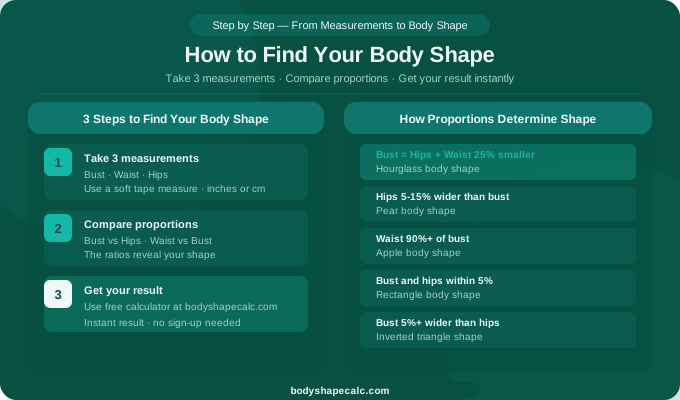
Finding your body shape takes less than 5 minutes and requires only a soft tape measure. This complete guide explains how to find your body shape from measurements, how to identify your body type without measurements, and how to use your result for style and clothing choices.
Find Your Body Shape
Use the free calculator to estimate your body shape from your measurements without relying on visual guessing.
Why Measurements
Why Measurements Can Help You Find Your Body Shape
People often try to determine their body shape by looking in the mirror, but visual impressions can vary with clothing, posture, lighting, and perspective. Measurements provide a more consistent way to compare proportions, although different body-shape systems may classify the same proportions differently.
Visual guessing can vary
Visual impressions of body proportions can change depending on clothing, posture, lighting, and viewing angle. Someone may interpret their proportions differently from a measurement-based classification. Measurements provide concrete values that can be compared using a particular body-shape system.
Measurements provide a consistent reference
Measurements give you numerical reference points that can be compared over time. Results can still vary slightly depending on where and how the tape is placed, so using the same measurement points and technique each time is important.
Proportions matter more than size
Body shape is about the ratio between measurements — not the numbers themselves. A person with measurements of 36-28-38 and a person with measurements of 44-36-46 can have the same body shape if their proportional ratios are identical. Size does not determine shape — proportion does.
Step 1
How to Take the Four Key Measurements
Four measurements can be used to estimate your body shape: bust or chest, natural waist, high hip, and full hips. Use a soft flexible tape measure and take all measurements in the same unit — either inches or centimeters.
Bust or Chest
Wrap the tape around the fullest part of your chest — across the nipple line. For women, measure in a non-padded bra or no bra for the most accurate reading. Keep the tape level and parallel to the floor all the way around. This is the measurement used for body shape, dress size, and clothing size charts.
Natural Waist
Find your natural waist by bending slightly to one side — the crease that forms is your natural waist. This is the narrowest point of your torso, usually 1 to 2 inches above your belly button. Wrap the tape around this narrowest point. Breathe out gently and read. Do not suck in your stomach.
High Hip
Move the tape to the high-hip area, typically several inches below the natural waist and above the fullest hip point. This optional measurement can provide additional information when distinguishing between lower-body-dominant categories such as spoon and pear. Measurement points can vary between body-shape systems.
Full Hips
Move the tape to the widest point of your hips and seat — usually 7 to 9 inches below your natural waist. Stand with feet together. Keep the tape level all the way around. This is the standard hip measurement used for body shape, waist-to-hip ratio, and clothing size.
Step 2
How to Identify Your Body Shape from Measurements
Once you have your measurements, you can compare the relationships between your bust or chest, waist, high hip, and hips. You can also enter them into the free body shape calculator above for an estimated result. The exact classification can vary between body-shape systems.
Hourglass body shape
Hourglass proportions generally describe a relatively balanced bust and hip measurement with a noticeably smaller waist. Example: Bust 36, Waist 27, Hips 37 — an illustrative example of balanced bust and hip proportions with clear waist definition. Different classification systems may use different thresholds.
Pear body shape
Pear proportions generally describe hips that are wider than the bust or upper body, often with some waist definition. Example: Bust 34, Waist 27, Hips 38 — an illustrative lower-body-dominant proportion. The amount of difference can vary between people and classification systems.
Apple body shape
Apple proportions generally describe a fuller midsection with less waist contrast. Example: Bust 38, Waist 36, Hips 39 — an illustrative example where the waist is relatively close to the bust and hip measurements. Individual proportions can vary considerably.
Rectangle body shape
Rectangle proportions generally describe bust, waist, and hip measurements that are relatively close, creating a straighter silhouette with less waist contrast. Example: Bust 36, Waist 31, Hips 37 — an illustrative example. Different classification systems may use different thresholds.
Inverted triangle body shape
Inverted triangle proportions generally describe an upper body that is wider than the hips. Example: Bust 40, Waist 32, Hips 37 — an illustrative upper-body-dominant proportion. The pattern can occur in people with different body types and builds.
Spoon body shape
Spoon proportions are generally described as a lower-body-dominant silhouette with hips wider than the bust and a more noticeable curve around the high-hip area. Example: Bust 34, Waist 27, High hip 35, Hips 39 — an illustrative example of this pattern. Definitions can vary between classification systems.
Without Measurements
How to Find Your Body Shape Without a Tape Measure
If you do not have a tape measure, here are two alternative methods to identify your body shape.
Method 1 — String method
Use a non-stretchy piece of string or ribbon. Wrap it around your bust at the fullest point, mark where it meets, and measure the string against a ruler. Repeat for the waist and hips. This provides approximate circumference measurements that you can enter into the body shape calculator.
Method 2 — Quiz method
Take the free body shape quiz at bodyshapecalc.com/tools/body-shape-quiz/ — answer 5 questions about your proportions without any measurements. The quiz asks about shoulder width, waist definition, weight distribution, bust-to-hip comparison, and hip shape. Less accurate than measurements but useful for a quick estimate.
Common Mistakes
Common Mistakes When Identifying Body Shape
These are the most common errors people make when trying to find their body shape.
Using clothing size instead of measurements
Your clothing size is not your body measurement. A size 12 dress does not mean your bust is 38 inches. Clothing sizes vary by brand and style. Always use actual tape measure readings for body shape calculations.
Measuring at the wrong waist point
People may measure the waist at the belly button or at the trouser waistband level, but body-shape systems generally use a defined waist measurement point. When using a natural-waist method, find the narrowest part of your torso and use the same point consistently. Measurement definitions can vary between systems.
Confusing hourglass and rectangle
Hourglass and rectangle can look similar because both may have relatively balanced bust and hip measurements. A commonly described difference is the amount of waist contrast: hourglass has a more noticeably defined waist, while rectangle has less waist contrast. Exact thresholds vary between classification systems.
Ignoring the high hip measurement
A high-hip measurement can provide additional information when comparing spoon and pear descriptions. The high hip is generally measured below the natural waist and above the fullest hip point. Include it when your chosen body-shape system uses this measurement.
Deciding based on weight or size
Body shape is about proportions — not size or weight. A plus size woman and a slim woman can have identical body shapes if their proportional ratios are the same. Never assume your body shape based on your weight or dress size.
Expecting a perfect match
Most people sit at or near a border between two shapes. If your measurements are between pear and hourglass, both sets of style tips may apply. Body shapes are categories — most real bodies are somewhere in between. Use the closest match as a starting point.
Use Your Result
What to Do Once You Find Your Body Shape
Once you know your body shape, you can use it for clothing, style, and self-understanding.
Hourglass Guide
Complete guide — measurements, outfit ideas, best jeans, dresses, and style tips.
Pear Guide
Complete guide — measurements, outfit ideas, best jeans, dresses, and style tips.
Apple Guide
Complete guide — measurements, outfit ideas, best jeans, dresses, and style tips.
Rectangle Guide
Complete guide — measurements, outfit ideas, best jeans, dresses, and style tips.
Inverted Triangle Guide
Complete guide — measurements, outfit ideas, best jeans, dresses, and style tips.
Spoon Guide
Complete guide — measurements, outfit ideas, best jeans, dresses, and style tips.
Related Tools
Tools to Help You Find Your Body Shape
Body Shape Calculator
Measurement-based method — enter bust, waist, high hip, and hip measurements for an estimated result.
Body Shape Quiz
No measurements needed — answer 5 questions to find your body shape.
Waist to Hip Ratio
Calculate your WHR from waist and hip measurements.
How to Measure
Step by step guide to taking accurate body measurements at home.
All Body Shapes
Complete overview of all 7 female body shapes with measurements and style tips.
Dress for Body Type
Complete style guide for every body shape — women, men, plus size, wedding.
FAQ
How to Find Your Body Shape — FAQs
How do I find my body shape?
Take measurements of your bust or chest, waist, high hip, and hips using a soft tape measure. Enter them into the free body shape calculator at bodyshapecalc.com for an estimated result. You can also compare your proportions manually, although the exact classification depends on the body-shape system being used.
How do I find my body shape without a tape measure?
Use a non-stretchy string wrapped around each measurement point, mark where it meets, and measure against a ruler. Alternatively, take the free body shape quiz at bodyshapecalc.com/tools/body-shape-quiz/ — answer 5 questions about your proportions without any measurements.
How do I know if I am hourglass or pear?
Compare your bust and hip measurements and look at the amount of waist definition. If your bust and hips are relatively balanced and your waist is noticeably smaller, your proportions may resemble an hourglass description. If your hips are noticeably wider than your bust or upper body, your proportions may resemble a pear description. Classification thresholds vary by system.
How do I determine my body shape as a woman?
Measure your bust, waist, high hip, and hips. Compare the upper and lower body proportions and look at the amount of waist definition. You can then enter all measurements into the free calculator for an estimated body-shape category. The exact classification method can vary between systems.
How do I figure out my body shape for men?
For men, measure your chest, waist, and hips and compare their proportions. A broader chest relative to the hips may resemble an inverted-triangle or V-shaped description, while relatively similar measurements may resemble a rectangle description. A fuller waist relative to the chest and hips may resemble an apple or oval description. Classification systems can vary.
Can my body shape change?
Yes. Body shape can change with age, weight fluctuation, pregnancy, and exercise. Body shape is defined by your current measurements and proportions — not by a permanent label. Recalculate whenever your measurements change significantly. Many women find their body shape shifts especially around pregnancy and menopause.
What is the most common female body shape?
There is no single reliable prevalence figure for female body-shape categories because different systems use different definitions and measurement thresholds. Rectangle, pear, hourglass, apple, spoon, triangle, and inverted triangle are commonly used descriptive categories, but reported prevalence depends on the classification method and population.
How accurate is a body shape calculator?
A measurement-based body shape calculator provides an estimate based on the measurements and classification rules it uses. Results depend on taking measurements consistently and on the body-shape system behind the calculator. Use the same measurement points and technique each time for more consistent results.