Measurement Guide
How to Measure Bust
Your bust measurement is used for body shape calculations, dress sizing, shirt sizing, bra sizing, and swimsuit fit. This step by step guide covers how to measure your full bust, upper bust, and underbust correctly at home — for women and men, in inches or centimeters.
Use Your Bust Measurement
Enter your bust, waist, high hip, and hip measurements into the free body shape calculator for an estimated body-shape category.
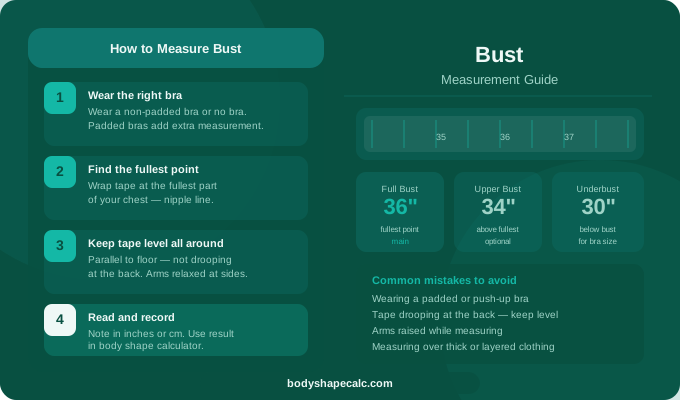
Measurement Types
Full Bust, Upper Bust, and Underbust — What Is the Difference?
There are three bust measurement points used for different purposes. Understanding the difference helps you use the correct measurement for each situation.
Full Bust
The full bust measurement is taken around the fullest part of the chest — across the nipple line. This is the standard bust measurement used for body shape calculations, dress sizing, clothing size charts, and most fashion purposes. When someone says "measure your bust," they almost always mean the full bust.
Upper Bust
The upper bust is measured just above the chest, below the armpits — above the fullest bust point. It is used for shirt sizing and some swimsuit sizing. Upper bust is sometimes called the "chest" measurement in men's sizing. For women, it is also useful for pattern making when the full bust measurement gives a very different sizing result.
Underbust
The underbust is measured directly below the chest, where the bra band sits. This measurement is used to calculate bra band size. In UK bra sizing, the underbust measurement in inches corresponds closely to the band size. The underbust is also called the "band" or "under bust" measurement.
Step by Step
How to Measure Your Full Bust — Step by Step
Follow these steps for an accurate full bust measurement at home. You need a soft flexible measuring tape.
Step 1 — Wear the right clothing
For women, measure in a well-fitted, non-padded bra or no bra at all. Heavily padded or push-up bras add artificial volume and give an inaccurate reading. For men, measure over a thin fitted T-shirt or directly on the skin. Remove bulky jumpers, hoodies, or thick jackets before measuring.
Step 2 — Find the fullest point
The fullest part of your chest is usually across the nipple line. Stand naturally with your arms relaxed at your sides. Do not cross your arms or flex your chest muscles. The tape should wrap around the widest circumference of the chest area.
Step 3 — Wrap the tape around
Wrap the flexible measuring tape around your chest at the fullest point. Keep the tape level and parallel to the floor all the way around. The tape should sit flat against your skin at the back — ask someone to hold the back section of the tape for the most accurate result.
Step 4 — Keep the tape snug, not tight
The tape should be snug against your body without compressing the chest. You should be able to fit one finger under the tape. A tape that is too tight gives a smaller reading. A tape with gaps gives a larger reading. Both reduce accuracy.
Step 5 — Breathe normally and read
Breathe normally and read the number on the tape where it meets the zero end. Do not hold your breath or expand your chest. A relaxed, natural measurement is the most useful for clothing sizing and body shape calculations.
Step 6 — Measure twice
Take the measurement twice and use the average. Small differences between readings are normal. If your two readings differ by more than half an inch (1 cm), measure a third time and use the middle value. Consistency matters — always measure at the same time of day in the same clothing.
Underbust Measurement
How to Measure Underbust (Band Measurement)
The underbust measurement is used for bra band sizing. Here is how to measure it correctly.
Where to measure underbust
Wrap the tape measure directly below your chest — at the point where your bra band sits. This is the narrowest part of the torso just beneath the chest. Keep the tape level and snug but not tight. Breathe out gently and read the measurement.
Underbust for bra band size
In UK bra sizing, your underbust measurement in inches corresponds directly to your band size. If your underbust measures 30 inches, your band size is 30. In US bra sizing, the method varies slightly by brand — some add 4 inches to the underbust for older sizing methods, while modern brands often use the direct measurement. Always check the specific brand's sizing guide.
What Is It Used For?
What Your Bust Measurement Is Used For
Your bust measurement is used differently for different purposes. Here is a guide for each common use.
Bust Measurement for Body Shape
For body shape calculation, use the full bust measurement — the widest circumference of your chest. This is compared with waist and hip measurements to estimate body proportions and body shape. Use the same unit for all measurements and enter them into the body shape calculator for an estimated body-shape category.
Bust Measurement for Dress Size
For dress and top sizing, use the full bust measurement. Compare with the brand's size chart. Most size charts show bust, waist, and hip measurements for each size. If your measurements fall between sizes, size up for fitted styles and size to your largest measurement for the best overall fit.
Bust Measurement for Bra Size
For bra sizing, you need both the underbust (band size) and full bust measurements. The cup size is calculated from the difference between the two. For example, if your full bust measures 36 inches and underbust measures 32 inches, the difference is 4 inches, which typically corresponds to a D cup. Band size is based on the underbust measurement.
Bust Measurement for Shirts
For shirt sizing, many brands use the chest or upper bust measurement rather than the full bust. Measure around the chest just under the armpits — the widest part of the chest excluding the bust point. For men, this chest measurement is the primary shirt sizing measurement. For women, check whether the brand uses full bust or upper bust for shirt sizing as this varies.
Bust Measurement for Swimsuits
For swimsuit sizing, most brands use the full bust measurement alongside hip and waist. Swimsuit tops are sized separately from bottoms in many bikini styles. For one-piece swimsuits, the full bust measurement alongside hip is most critical for sizing. Check whether the brand uses full bust or upper bust for their swimsuit tops.
Bust Measurement for Patterns and Sewing
For sewing patterns, both full bust and upper bust measurements may be needed. Patterns that include a bust dart typically size by the full bust. Patterns without bust darts sometimes size by the upper bust. The difference between full bust and upper bust (called the "bust adjustment") determines how much adjustment is needed for a well-fitted garment.
No Tape Measure?
How to Measure Bust Without a Measuring Tape
If you do not have a soft measuring tape at home, here are two alternative methods.
String or ribbon method
Wrap a non-stretchy piece of string, ribbon, or cord around your chest at the fullest point. Mark where it meets with a pen or clip. Lay the string flat on a hard surface and measure with a ruler. This gives your full bust circumference without a tape measure.
Existing clothing method
If you have a well-fitting shirt or top, you can estimate your bust measurement by laying it flat and measuring across the chest at the fullest point, then doubling the number. This gives an approximate chest measurement but may not be accurate enough for bra sizing. Use the string method for a more precise result.
Men vs Women
How to Measure Bust for Men and Women
The technique is the same for men and women, but the terminology and use differ slightly.
How to measure bust for women
For women, measure in a well-fitted, non-padded bra or no bra. Measure around the fullest part of the chest — across the nipple line. This full bust measurement is used for body shape, dress size, swimsuit, and clothing size. The underbust measurement is additionally needed for bra sizing.
How to measure bust for men
For men, the bust or chest measurement is taken around the fullest part of the chest — typically across the nipple line or at the widest chest point. This measurement is used for shirt sizing, suit sizing, jacket sizing, and body shape calculations. Men's sizing typically refers to this as the "chest" measurement rather than "bust."
Common Mistakes
Bust Measurement Mistakes to Avoid
Measuring in a padded bra
A padded or push-up bra adds artificial volume and gives an inflated bust measurement. Measure in a non-padded bra or no bra for the most accurate full bust reading.
Tape not level at the back
The tape must stay level all the way around — parallel to the floor. If the tape dips at the back, the measurement will be inaccurate. Use a mirror or ask someone to hold the tape level at the back.
Measuring at the wrong height
The full bust is measured at the fullest point — usually across the nipple line. Measuring too high (across the upper chest) gives a smaller number. Measuring too low (below the bust) gives the underbust or waist measurement, not the bust.
Pulling the tape too tight
A tight tape compresses the chest and gives a smaller reading. The tape should be snug without indenting the skin. One finger should fit comfortably under the tape.
Measuring over bulky clothing
Thick sweaters, hoodies, or padded jackets add bulk. Always measure over thin clothing or directly on the skin for consistent results.
Using full bust for bra band
The bra band size uses the underbust measurement, not the full bust. Confusing these two gives an incorrect bra size. The full bust is used for cup size calculation, not band size.
Use Your Measurement
What to Do With Your Bust Measurement
Body Shape Calculator
Enter your bust, waist, high hip, and hip measurements to find your body shape — hourglass, pear, apple, rectangle, or more.
Body Measurement Calculator
Full tool — enter bust, waist, neck, hips, height, and weight for BMI, WHR, body fat, and body shape.
Dress Size Calculator
Use your bust measurement to estimate US, UK, and EU dress size.
How to Measure Waist and Hips
Combined guide for measuring bust, waist, and hips together for body shape calculations.
How to Measure Waist
Step by step guide to measuring your natural waist correctly for body shape and clothing size.
How to Measure Hips
Guide to measuring full hips and high hip measurements for accurate body shape results.
How to Measure shoulders
This step-by-step guide explains how to measure shoulder width correctly for both women and men using either inches or centimeters..
FAQ
How to Measure Bust — Frequently Asked Questions
Where exactly should I measure my bust?
Measure around the fullest part of your chest — usually across the nipple line. Keep the tape level and parallel to the floor all the way around. This gives your full bust measurement, which is used for body shape, dress size, and clothing size charts.
What is the difference between bust and chest measurement?
Bust and chest refer to the same measurement — the circumference of the chest at its fullest point. "Bust" is the term typically used in women's sizing and body shape calculations. "Chest" is the term typically used in men's sizing. The measurement technique is identical for both.
Should I measure bust with or without a bra?
For the most accurate full bust measurement for clothing size and body shape, measure in a well-fitted, non-padded bra or no bra. Padded or push-up bras add artificial volume and give an inflated reading. For bra sizing specifically, measure in your current bra to get a starting point, then verify without a bra.
What is the underbust measurement?
The underbust is measured directly below the chest, where the bra band sits. It is used to calculate bra band size. In UK sizing, the underbust in inches corresponds directly to the band size. The difference between full bust and underbust determines bra cup size.
What is the upper bust measurement?
The upper bust is measured just above the chest — below the armpits and above the nipple line. It is used for shirt sizing and some swimsuit tops. For women with a larger full bust relative to frame, the upper bust measurement may give a better fit for shirts and structured tops that are sized by upper chest rather than full bust.
How do I measure bust for bra size?
For bra sizing, you need two measurements. First, take your underbust measurement for the band size. Second, take your full bust measurement. Compare the two measurements using the sizing method provided by the bra brand, because cup-size calculations vary between sizing systems and brands. Always check the specific brand's sizing guide.
How do I measure bust for a dress?
For dress sizing, use your full bust measurement — around the fullest part of your chest in a non-padded bra or no bra. Compare this with the brand's size chart. If your bust measurement falls between sizes, size up for the bust and alter elsewhere if needed, or choose a style with more stretch.
How do I measure bust for men or a shirt?
For men's shirt sizing, measure around the fullest part of the chest — across the nipple line or widest chest point — in a thin T-shirt or directly on skin. This chest measurement corresponds to shirt sizes. For example, a 40-inch chest typically corresponds to a size L or XL depending on the brand. Always check the brand's specific size chart.
How do I measure bust without a measuring tape?
Use a non-stretchy piece of string or ribbon wrapped around your chest at the fullest point. Mark where it meets, then measure the string against a ruler. This gives your full bust circumference without a tape measure. Alternatively, measure a well-fitting shirt by laying it flat and doubling the chest measurement.
How do I measure bust waist and hips together?
Measure bust first (fullest chest point), then waist (narrowest torso point), then high hip (3-4 inches below waist), then full hips (widest seat point). Use the same unit for all measurements. Enter all four into the body shape calculator to estimate a body-shape category, or use them for clothing size charts.