Measurement Guide
How to Measure Hips
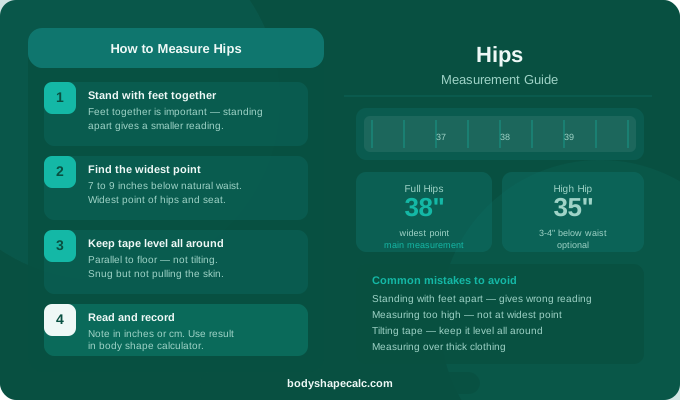
A hip measurement is taken around the widest point of your hips and seat. The exact position can vary by body shape and individual proportions. It can be used for body-shape calculations, clothing-size comparisons, waist-to-hip ratio, and some body measurement formulas. This step-by-step guide explains where to measure full hips, high hip, and waist at home for women and men, in inches or centimeters.
Use Your Hip Measurement
Enter your bust, waist, high hip, and hip measurements into the free body shape calculator for an estimated body-shape category.
Measurement Points
Where to Measure Hips: Natural Waist, High Hip, and Full Hips
There are three commonly used lower-body measurement points. Each is taken at a different position and may be used for different purposes. Using the appropriate measurement for the intended calculation helps keep results consistent.
Natural Waist
The natural waist is the narrowest point of the torso — usually 1 to 2 inches above the belly button. It is the reference point from which hip measurements are positioned. The waist is used for body shape, dress size, waist-to-hip ratio, and skirt sizing.
High Hip
The high hip is measured 3 to 4 inches below the natural waist — above the fullest hip point. It captures the upper hip curve and the hip shelf area. The high hip is what distinguishes spoon body shape from pear body shape in body calculators that include this measurement.
Full Hips
The full hip measurement is taken at the widest point of the hips and seat — usually 7 to 9 inches below the natural waist. This is the standard hip measurement used for body shape, waist-to-hip ratio, pants sizing, jeans sizing, and dress sizing.
Step by Step
How to Measure Full Hips — Step by Step
Follow these steps to measure your full hips accurately at home. You need a soft flexible measuring tape.
Step 1 — Stand correctly
Stand upright with your feet together. Do not stand with feet apart — this changes the shape of the hip area and gives a smaller reading. Look straight ahead. Keep your arms relaxed at your sides. Do not suck in or push out the buttocks.
Step 2 — Find the widest point
The widest point of your hips and seat is usually 7 to 9 inches below your natural waist. Run the tape down from your natural waist while checking in a mirror to find where the circumference is greatest. This is the fullest point of the hips and buttocks combined.
Step 3 — Wrap the tape around
Wrap the flexible measuring tape around your hips at the widest point. Keep the tape level and parallel to the floor all the way around. The tape must stay at the same height at the front and the back — ask someone to hold the back section, or use a mirror to check it stays level.
Step 4 — Keep the tape snug
The tape should be snug against your body without compressing the hips. You should be able to fit one finger under the tape. A tape that is too tight gives a smaller reading. A tape with gaps gives a larger reading. Both reduce accuracy.
Step 5 — Breathe normally and read
Breathe normally and read the number on the tape where it meets the zero end. Stand relaxed — do not hold your breath or flex the muscles. A natural, relaxed measurement is the most useful for body shape and clothing size calculations.
Step 6 — Measure twice
Take the measurement twice and use the average. Small differences between readings are normal. If the two readings differ by more than half an inch (1 cm), take a third reading and use the middle value. Consistency matters — always measure at the widest point.
High Hip
How to Measure High Hip
The high hip measurement is optional for basic sizing and can provide additional information for body-shape classification. Here is how to measure it.
Where to measure high hip
Find your natural waist (narrowest torso point). Measure down approximately 3 to 4 inches. Wrap the tape around at this height — above the fullest hip point. This is the high hip measurement. It captures the upper hip shelf area and is what distinguishes spoon body shape from pear in calculators that include it.
When is high hip measurement needed?
The high hip measurement is used in the body shape calculator on this site to identify spoon body shape — which has a more pronounced high hip curve compared to pear shape. It is optional and can provide additional information for an estimated body-shape result. For basic clothing sizing, the full hip measurement is usually sufficient.
What Is It Used For?
What Your Hip Measurement Is Used For
Your hip measurement is used differently for different purposes. Here is a guide for each common use.
Hip Measurement for Body Shape
For body shape calculation, use the full hip measurement alongside bust, waist, and high hip. The proportions between hips, bust, waist, and high hip can contribute to an estimated body-shape category. Use the same unit for all measurements and enter them into the body shape calculator for an estimated result.
Hip Measurement for Pants and Jeans
For pants and jeans sizing, use the full hip measurement. Most pants size charts show both waist and hip measurements — size for whichever is larger and adjust the other with alterations if needed. For jeans with a significant waist-to-hip difference (common in pear shapes), look for styles that fit the hip and can be taken in at the waist.
Hip Measurement for Dress and Skirt Size
For dress and skirt sizing, use the full hip measurement alongside bust and waist. For fitted dresses and A-line skirts, the hip measurement is often the most critical for lower-body fit. Compare with the brand's size chart and size for the largest measurement, then alter the rest.
Hip Measurement for Waist-to-Hip Ratio
For waist-to-hip ratio (WHR), divide your natural waist measurement by your full hip measurement. Use the same unit for both. WHR is calculated by dividing waist circumference by hip circumference. Body-shape interpretations based on WHR can vary between classification systems, so it should be treated as one measurement rather than a definitive body-shape test.
Hip Measurement for Body Fat
Some tape-measure body-fat formulas use hip circumference along with other measurements. If you use a specific formula, follow its measurement instructions because measurement positions and requirements can vary. A tape-measure estimate is only an estimate and should not be treated as a direct measurement of body-fat percentage.
Hip Measurement for Underwear and Swimwear
For underwear and swimwear sizing, use the full hip measurement. Underwear and bikini bottoms are typically sized by hip circumference. Check whether the brand uses the widest hip measurement or a slightly higher measurement — this varies by style. High-waist underwear and swimwear may also consider the high hip measurement.
No Tape Measure?
How to Measure Hips Without a Measuring Tape
If you do not have a soft measuring tape, here are two methods that work.
String or ribbon method
Wrap a non-stretchy piece of string, ribbon, or cord around your hips at the widest point with feet together. Mark where it meets with a pen. Lay the string flat on a hard surface and measure with a ruler. This gives your full hip circumference without a tape measure.
Pants or jeans method
If you have a well-fitting pair of pants or jeans, lay them flat and measure across the widest hip area. Double the measurement for the circumference. Note that this gives your clothing hip size, not your body measurement — add 1 to 2 inches for ease to get your approximate body hip measurement.
Men vs Women
How to Measure Hips for Men and Women
How to measure hips for women
For women, measure the full hip circumference at the widest point of the hips and seat — usually 7 to 9 inches below the natural waist. Stand with feet together. Also measure the high hip if your body-shape calculator requires it. The hip-to-waist difference is typically more pronounced in women, making hip measurement central to body shape identification.
How to measure hips for men
For men, measure the full hip circumference at the widest point of the hips and seat. In men, the hip measurement and waist measurement are often closer together than in women. The hip measurement is used for body shape and some pants sizing. For trousers, many men's brands primarily use the waist measurement — but the hip measurement helps identify body shape and ensure comfortable seat fit.
Hip Dips
How to Measure Hips with Hip Dips
Hip dips (also called violin hips or trochanteric depressions) are inward curves below the hip bone and above the thigh. They are a normal skeletal feature. Here is how they affect hip measurement.
Where to measure with hip dips
With hip dips, the widest point of the hips may be at the hip bone (above the dip) or at the upper thigh (below the dip). For body shape and clothing size, always measure at the widest circumference — whichever point is larger. Wrap the tape at the fullest point of the hips and seat, not at the dip itself.
Hip dips and body shape
Hip dips do not determine body shape — proportions between bust, waist, and hips determine shape. A person with hip dips can have any body shape. The full hip measurement used for body shape calculation is taken at the widest point, regardless of whether hip dips are present.
Common Mistakes
Hip Measurement Mistakes to Avoid
Standing with feet apart
Standing consistently helps keep the measurement comparable. Use the same stance each time and keep your posture relaxed.
Tape not level at the back
The tape must stay parallel to the floor all the way around. If it dips lower at the back, the measurement will be inaccurate. Use a mirror or ask someone to check the tape level at the back.
Measuring at the wrong height
Measuring too high (at the high hip) gives a smaller number than the true full hip. Measuring too low (below the widest point) also gives a smaller number. Always find the widest point first before wrapping the tape.
Confusing high hip and full hip
High hip and full hip are different measurements taken at different positions. If a body-shape calculator asks for both, take them separately rather than entering the same measurement for both fields.
Using pants size as body measurement
Your pants measurement and body hip measurement are not necessarily the same because garments can include different amounts of ease. Use your measured body hip circumference when a calculator or size chart specifically asks for your body measurement.
Pulling the tape too tight
A tight tape compresses the hip area and gives a smaller number. The tape should be snug but not indenting the skin. One finger should fit comfortably under the tape at any point around the measurement.
Use Your Measurement
What to Do With Your Hip Measurement
Body Shape Calculator
Enter your bust, waist, high hip, and hips to find your body shape — hourglass, pear, apple, rectangle, and more.
Waist to Hip Ratio Calculator
Calculate your WHR from waist and hip measurements with a reference chart for men and women.
Body Measurement Calculator
Full tool — BMI, WHR, body fat estimate, and body shape from all measurements.
How to Measure Waist and Hips
Combined guide for measuring waist, high hip, and hips together in one session.
How to Measure Waist
Step by step guide to finding your natural waist and measuring it correctly.
Dress Size Calculator
Use your hip and bust measurements to estimate US, UK, and EU dress size.
How to Measure Shoulders
This step-by-step guide explains how to measure shoulder width for women and men using inches or centimeters.
FAQ
How to Measure Hips — Frequently Asked Questions
Where do you measure hips?
You measure hips at the widest point of your hips and seat, usually 7 to 9 inches below your natural waist. Stand with feet together and wrap the tape around at this widest point, keeping it level and parallel to the floor all the way around. This is your hip measurement, used for body shape, dress size, and waist-to-hip ratio.
Where exactly should I measure my hips?
Measure at the widest point of your hips and seat — usually 7 to 9 inches below your natural waist. Stand with feet together and keep the tape level all the way around. This is the full hip measurement used for body shape, WHR, and clothing sizing.
What is the difference between high hip and full hip?
High hip is measured 3 to 4 inches below the natural waist — above the fullest hip point. Full hip is measured at the widest point — 7 to 9 inches below the natural waist. They are at different heights and give different measurements. Body shape calculators may need both for accurate results.
How do I measure hips for pants?
Measure your full hip circumference at the widest point of your hips and seat with feet together. Compare with the pants brand's size chart — many charts show both waist and hip measurements for each size. compare both measurements with the brand's size chart and choose the size that best matches the garment's intended fit.
How do I measure hips for jeans?
Measure your full hip at the widest point with feet together. For jeans sizing, this hip measurement alongside your waist gives the most complete sizing picture. Look for jeans with stretch fabric if your waist-to-hip difference is significant — stretch accommodates curves better than rigid denim.
How do I measure hips without a measuring tape?
Use a non-stretchy piece of string wrapped around your hips at the widest point with feet together. Mark where it meets, then measure the string against a ruler for the circumference. Alternatively, measure a well-fitting pair of pants laid flat across the hip area and double the measurement.
How do I measure hips with hip dips?
With hip dips, measure at the widest circumference — whichever point is largest, whether above or below the dip. The full hip measurement for body shape and sizing always uses the widest point, not the narrowest (the dip itself). Hip dips are a normal skeletal feature and do not affect which measurement to use.
How do I measure hips for men?
For men, measure the full hip circumference at the widest point of the hips and seat with feet together. This is used for body shape and some pants seat sizing. Many men's pants brands size primarily by waist but a hip measurement helps ensure comfortable seat fit, especially for those with more hip volume relative to waist.
How do I measure bust, waist, and hips together?
Measure bust at the fullest chest point, waist at the narrowest torso point, high hip 3 to 4 inches below waist, and full hips at the widest seat point. Use the same unit for all measurements. Enter all four into the body shape calculator for an estimated body-shape category.
How do I measure hips for a dress?
Measure your full hip at the widest point of your hips and seat. Compare with the dress brand's size chart alongside your bust and waist. For fitted dresses, the hip measurement is often the most critical for lower-body fit. If measurements fall between sizes, size up and alter at the waist if needed.
How accurately should I measure my hips?
Measure consistently using the same units and technique each time. Small differences between readings are normal. Small differences matter for body shape proportion calculations and clothing sizing. Take the measurement twice and use the average. Ensure the tape is level, feet are together, and posture is natural and upright.